ABA Therapy for Young Children in Toronto: An Early Intervention Guide for Parents
The earliest years move faster than anyone tells you. One day your child is a newborn, and the next you are sitting across from a paediatrician, hearing words like "autism spectrum disorder" for the first time, or wondering whether the developmental differences you have noticed mean it is time to act. If your child is between the ages of two and six, you are in one of the most important developmental windows of their life.
The research on early intervention is clear: the sooner children with autism begin structured, evidence-based support, the more lasting the benefits. This guide was written specifically for parents of young children in Toronto and the GTA. It covers what early intervention ABA therapy actually looks like for toddlers and preschoolers, why the timing matters, what to expect from in-home delivery, and what happens when you reach out for help.
What Is Early Intervention ABA Therapy?
Early intervention ABA therapy is the application of Applied Behaviour Analysis principles to young children, typically ages two through six, during the years when the brain's capacity for growth and change is at its highest. Rather than waiting for a child to fall behind, early intervention meets children where they are and builds the foundational skills they need to thrive: communication, social connection, self-regulation, and daily living skills.
For very young children, ABA therapy is naturalistic and play-based. Goals are built around what the child is already motivated by. A session might focus on a child learning to point to request a favourite toy, imitating actions in a simple game, or building the earliest forms of functional communication. The approach is evidence-based and individually designed; what works for one child is thoughtfully tailored for your child.
At Mini Minds, early intervention ABA therapy is delivered in-home across Toronto and the GTA, in the environment where children feel safest and learn most naturally. There are no waitlists and no centre commutes. Your family works directly with Amy, not a rotating staff of junior therapists, every single session.
Why Starting ABA Early Matters for Children with Autism
The research on early intervention is consistent and compelling. A 2020 review published in Pediatrics, the journal of the American Academy of Pediatrics, found that children with autism who received intensive early intervention showed significantly greater gains in communication, adaptive behaviour, and cognitive development compared to children who began intervention later. The earlier children start, the more the brain's natural plasticity works in their favour.
This is not a reason to panic if your child is four or five. It is a reason not to wait.
One of the most common things Amy hears from families is: "We thought we had to wait for OAP funding or an official diagnosis before starting." This is a myth worth correcting. Private ABA therapy can begin at any time. Many families in Toronto start therapy while they are still navigating the diagnostic process, because the strategies that support a child with autism also benefit children who are showing developmental differences more broadly.
Children who begin intensive early intervention between ages two and four demonstrate, on average, greater improvements in language acquisition, social engagement, and school readiness compared to children who start later in the elementary years. This does not mean later starters cannot make meaningful progress. They absolutely can. It means that acting during the earliest developmental window gives your child the strongest possible foundation.
The goal of early intervention ABA at Mini Minds is not to change who your child is. It is to give them the tools and skills to navigate the world, connect with others, and experience the confidence that comes with growth.
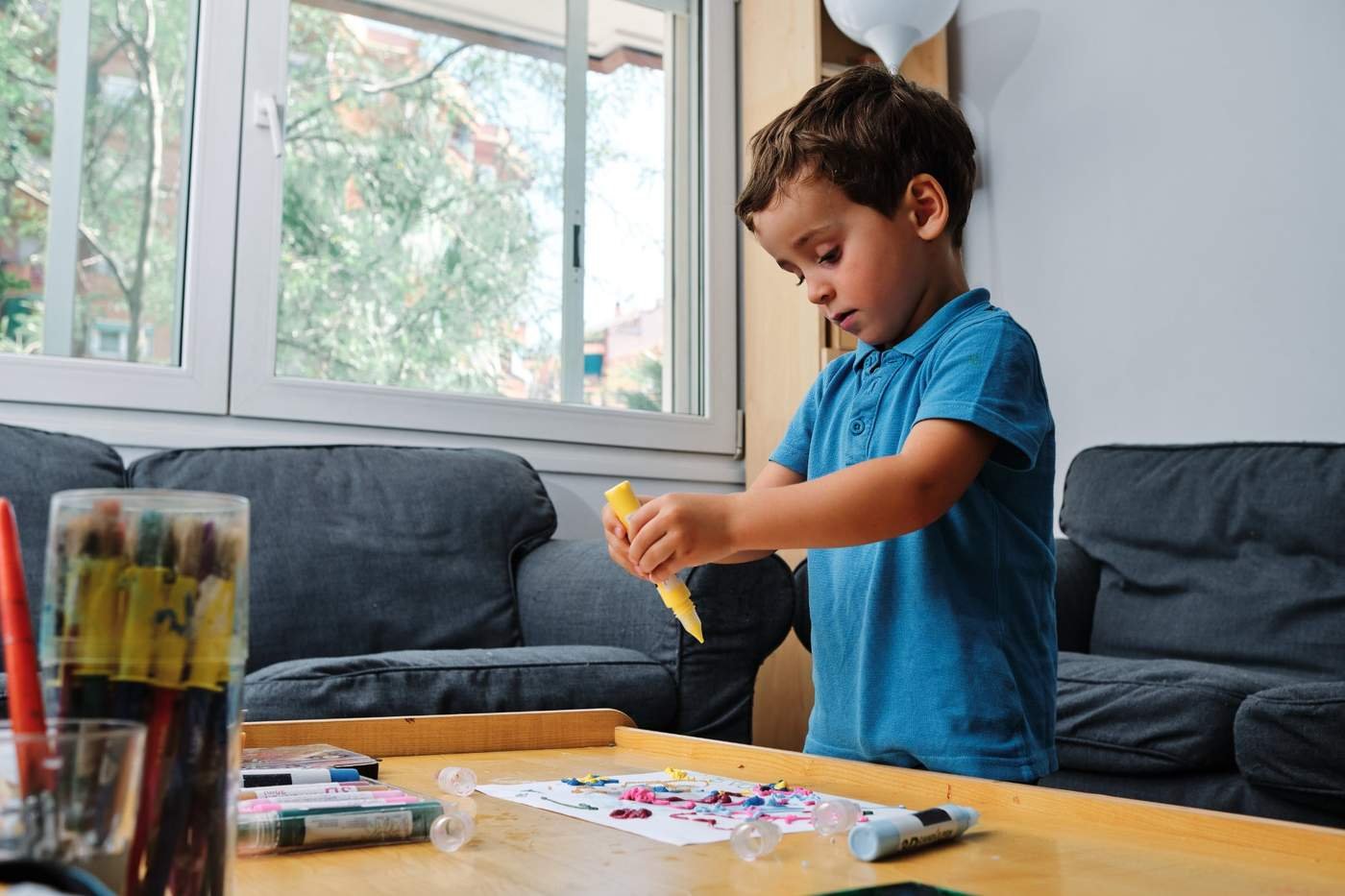
Every child has their own way of exploring the world. Early intervention ABA therapy meets them right there.
What ABA Therapy Actually Looks Like for a 2 or 3-Year-Old
“The best ABA session for a 2-year-old looks almost nothing like what most parents imagine. There’s no desk. There are no flashcards. We’re on the floor.”
In my sessions with children this age, I follow the child's lead completely. If they are interested in a puzzle, we work on communication and joint attention through the puzzle. If they are running from one end of the room to the other, we find the language and social skills embedded in that game. Young children learn through movement and play, and the most effective ABA sessions for toddlers are ones where the child does not know they are "in therapy" at all.
This does not mean sessions are unstructured. Every goal is carefully chosen and tracked. For a two-year-old, I might be working on helping them learn to point to request an object they want, a skill called a "mand." For a three-year-old, I might be focused on helping them initiate play with a sibling, or building the early social skills that will support them when they enter school. Progress happens in small, intentional steps.
In a home session, I spend the first few minutes reconnecting with the child. Not every child transitions easily, and I never rush that process. Then we move into activities that target the session goals, using the child's own toys and preferred activities. Parents are present and often coaching alongside me. The session belongs to your family as much as it does to your child.
This is what naturalistic, child-led ABA looks like in practice. It is warm. It is purposeful. And for children in the early intervention window, it can be genuinely transformative.
What Ages Can Start ABA Therapy in Toronto?
ABA therapy can begin as early as 18 months, though the most common starting range is between two and four years old. At Mini Minds, the youngest children Amy typically works with are toddlers who have received or are pursuing a diagnosis, or whose families have noticed developmental differences they want to address early.
Here is how goals and approaches shift across the early childhood age range:
Ages 18 months to 2 years: Focus is often on foundational communication skills, joint attention (learning to look and point to share experiences with others), and early play skills.
Ages 3 to 4 years: Language development, requesting, play with peers, and early self-regulation become central goals.
Ages 5 to 6 years: Kindergarten readiness, following multi-step instructions, managing transitions, and building social skills for classroom settings move to the foreground.
ABA is not a single protocol applied the same way regardless of age. It adapts. What a child works on at age two looks very different from what a school-aged child works on; the principles are consistent, but the goals are entirely individualized.
For older children, our ABA therapy in Toronto guide covers how the approach shifts for school-aged kids with autism.
The important message here is this: there is no "too early." If your child is under six and you have concerns, reaching out now is the right move.
In-Home ABA Therapy for Young Children vs. Centre-Based Options
For very young children, the question of where therapy happens matters more than many families initially realize. Centre-based programs require families to commute, adjust nap schedules, and introduce their toddler to an entirely new environment before learning can even begin. In-home therapy brings the session to your child, in their own space, with their own toys, surrounded by the people they trust most.
The table below compares the two delivery models across the considerations that matter most for families with young children:
| Consideration | In-Home (Mini Minds) | Centre-Based |
|---|---|---|
| Learning environment | Child's own home, familiar toys, comfortable and safe setting from the very first session | New facility, unfamiliar environment requiring adjustment time before learning can begin |
| Commute and logistics | None. Amy comes to you. No scheduling around naps, traffic, or travel routines. | Regular travel required, often multiple times per week. Disrupts nap schedules and family routines. |
| Skill generalization | Skills are learned in the real environment where they will actually be used | Skills learned at the centre may need to be transferred and re-practiced at home |
| Comfort for young children | High. Child is in their safe space with familiar people nearby. | Variable. Transition stress is common, especially for toddlers and children with sensory sensitivities. |
| Who delivers sessions | Amy directly, every single session. No rotating staff, no handoffs, no new faces. | May vary. Staff rotation is common in larger multi-therapist programs. |
For toddlers especially, the comfort factor is not simply a preference, it is a clinical consideration. A two-year-old who is dysregulated from a 45-minute commute is not in a state to learn. Starting at home removes that barrier entirely.
To learn more about how in-home ABA therapy works in Toronto and the GTA, our in-home guide covers the full picture of what in-home delivery looks like, from the first session to ongoing progress.
What to Expect in the First Few Months of ABA Therapy
Starting ABA therapy for the first time can feel like a significant step. Here is exactly how the process works at Mini Minds.
Free consultation. Amy listens to your story. She asks questions about your child's development, daily routines, current challenges, and what your family most wants to achieve. You are not expected to have all the answers. That’s what the conversation is for!
In-person observation. Amy visits your home or school setting to observe your child directly. This is where she begins to understand how your child communicates, plays, and responds to different situations and people.
Personalized plan. Based on what Amy learns, she builds a therapy plan together with your family. Goals are chosen with your input. Nothing is decided without your voice in the conversation.
Sessions begin. For very young children, early sessions are child-led and paced gently. The first priority is building trust and comfort before building new skills.
Regular reporting and parent coaching. Parents receive ongoing updates and coaching on how to reinforce progress between sessions. The most effective ABA programs are ones where the family is actively involved, not just the child.
- Narrate your child's play using simple, clear language. For example: "You're building! Tower up!" This models communication without pressure.
- Follow your child's lead during unstructured play for at least 10 to 15 minutes each day. Let them direct, and join in on their terms.
- Celebrate small wins, whether verbal or non-verbal, the same way you would celebrate a big milestone. Consistent, warm responses build momentum.
- Keep Amy updated on what you notice at home. Your observations directly shape the therapy plan, and the things you see between sessions are some of the most valuable information available.
To learn more about the full process from consultation through ongoing sessions, see how the full process works when you start working with Mini Minds.
How Much Does ABA Therapy for Young Children Cost in Toronto?
Private ABA therapy in Toronto is billed at an hourly rate. At Mini Minds, specific rates are discussed during the free consultation, because the number of recommended hours depends entirely on your child's age, current developmental profile, and goals.
What many families find is that the private therapy path and the public funding path are not mutually exclusive. Families frequently pursue private therapy with Amy while their child is on an Ontario Autism Program (OAP) waitlist, so that the early developmental window is not lost to administrative timelines.
Mini Minds is not a registered OAP service provider. Any decisions about OAP funding, waitlist registration, or provider eligibility are conversations with the Ontario government directly. You can learn more about the Ontario Autism Program and current program details at the the OAP website.
Some families are also able to submit receipts for reimbursement through extended health benefits plans. Whether your plan covers behaviour therapy services should be confirmed directly with your insurer.
To discuss costs and whether private ABA therapy is the right fit for your family, book a free consultation with Amy.
FAQs About ABA Therapy for Young Children in Toronto
At what age should a child start ABA therapy?
Most children begin ABA therapy between the ages of two and four, though it can start as early as 18 months. The goal is to begin as soon as you have concerns, not to wait for a formal diagnosis or a specific age milestone. Early access to structured, play-based support gives very young children the greatest opportunity to build foundational communication and social skills during the brain's most flexible developmental period.
What does ABA therapy look like for a 2 or 3-year-old?
For very young children, ABA therapy is naturalistic and play-based. Sessions happen on the floor, with the child's own toys and preferred activities. Goals are embedded into games, routines, and movement rather than seated instruction. There is no desk, no worksheets, and no rigid drill schedule. A session might focus on teaching a toddler to point to request something they want, to imitate an action, or to engage in a brief back-and-forth exchange with another person, all within the context of play.
Does my child need an autism diagnosis before starting ABA?
No. A formal diagnosis is not required to begin private ABA therapy at Mini Minds. Many families start therapy while they are still in the diagnostic process, or while waiting for an assessment referral. If you have concerns about your child's development, you do not have to wait for a piece of paper before seeking support. Early access matters more than the timing of a diagnosis.
What is early intervention ABA therapy?
Early intervention ABA therapy refers to the application of ABA principles during the earliest developmental years, typically ages two through six. It differs from ABA for older children in its focus on foundational skills; communication, joint attention, play, and daily living skills. And, in its delivery, which is almost always naturalistic and child-led for this age group. In Ontario, you may also hear the term IBI (Intensive Behavioural Intervention), which is a structured, high-intensity form of ABA often associated with the public funding system. Private early intervention ABA can look similar in goals while being more flexible in format.
Is ABA therapy effective for toddlers with autism?
Yes. Research consistently shows that children with autism who begin structured, evidence-based behavioural support during the toddler and preschool years show greater gains in communication, social engagement, and adaptive skills compared to children who begin later. The earlier the start, the more the brain's natural flexibility works in the child's favour. That said, children at any age can make meaningful, real progress with the right support and the right approach.
For more answers to common questions about therapy at Mini Minds, visit our full FAQ page.