Asperger's Syndrome Therapy in Toronto: A Parent's Guide to Support and Services
If your child has been diagnosed with Asperger's syndrome (now referred to as ASD Level 1), you may be searching for answers. You see a child who is bright, articulate, and capable in so many ways. And yet something feels difficult. Maybe it is friendships. Maybe it is anxiety, or the frustration that builds when a routine changes unexpectedly. Maybe it is the sense that your child is working harder than anyone else just to get through an ordinary school day.
You are not looking for a generic approach. You are looking for support that actually fits your child: their strengths, their challenges, and who they are. This guide is written specifically for parents of children with Asperger's syndrome and ASD Level 1. It covers what to expect from therapy, which approaches work best for this presentation, and how Mini Minds supports families like yours across Toronto and the GTA.
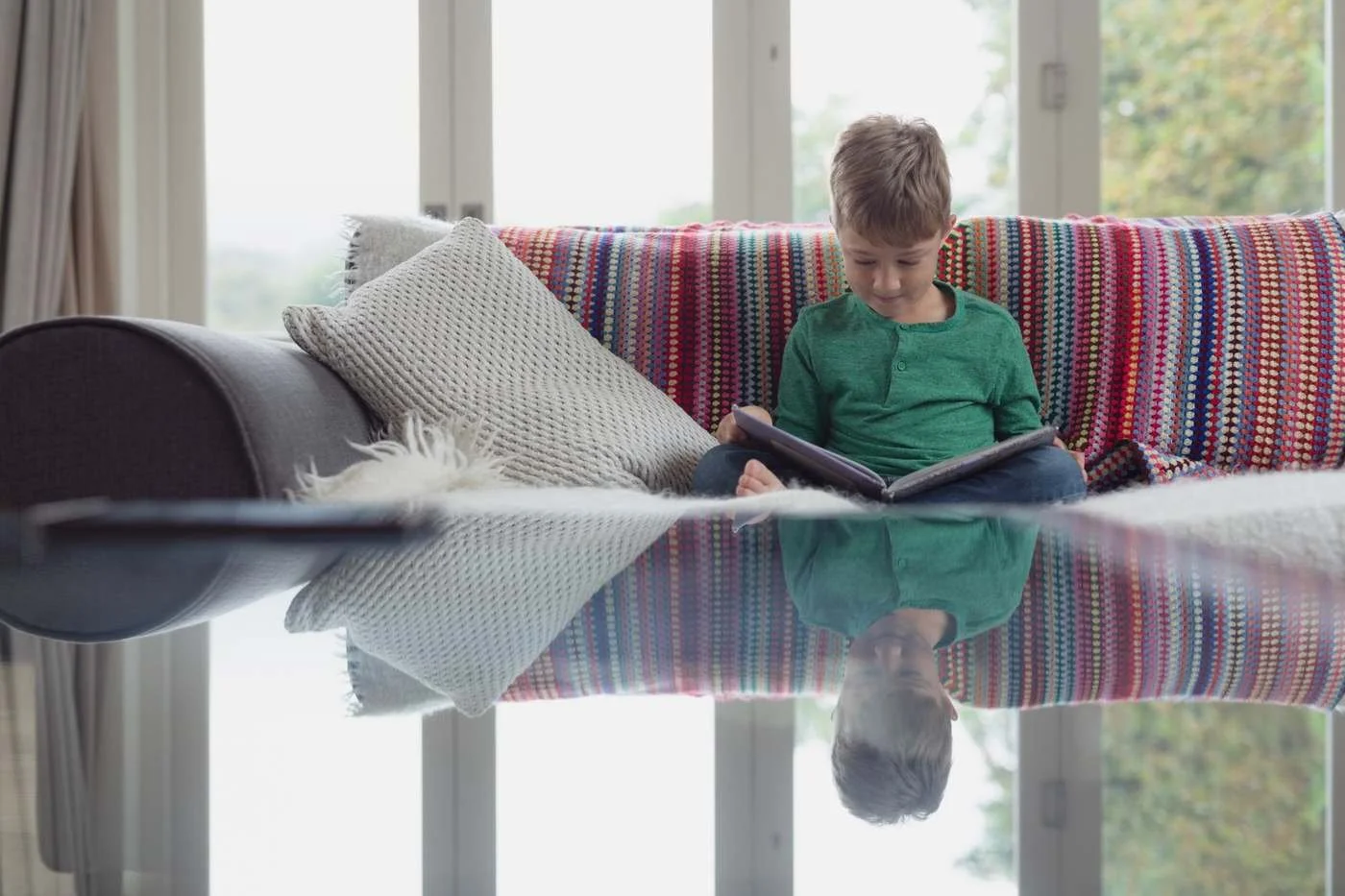
Every child deserves a space to focus and grow. At Mini Minds, therapy meets your child where they are, at home, in their element.
What Is Asperger's Syndrome?
Asperger's syndrome is a neurodevelopmental condition characterized by strong verbal and intellectual abilities alongside challenges in social communication, rigid thinking patterns, intense focused interests, and often heightened sensory sensitivities.
In 2013, the DSM-5 reclassified Asperger's syndrome as Autism Spectrum Disorder (ASD) Level 1 — the level indicating the least amount of additional support required. For many families, the term 'Asperger's' still resonates and remains widely used. Both terms describe the same profile, and both appear throughout this guide.
The core characteristics of Asperger's syndrome and ASD Level 1 include:
Strong vocabulary and verbal expression, alongside difficulty reading social cues
Challenges with back-and-forth conversation and understanding unwritten social rules
Deep, intense interests in specific topics
Rigid thinking and difficulty tolerating changes to routines or expectations
Sensory sensitivities to sounds, textures, lights, or environments
Anxiety, often connected to social situations or performance expectations
Approximately 1 in 50 Canadian children has been identified with autism spectrum disorder. Children with ASD Level 1 (formerly Asperger’s) are often identified later than children with more significant support needs, because strong verbal ability and academic performance can mask underlying challenges.
Source: Autism Ontario / Public Health Agency of Canada
It’s worth noting that many children with ASD Level 1 are described as 'high-functioning,' but this framing can be misleading. High verbal ability does not mean a child is not struggling. For many of these children, the effort required to navigate social expectations at school is exhausting. The emotional fallout often happens at home, where they finally feel safe to let go.
The Asperger's Society of Ontario offers parent resources, community groups, and information on local supports for families navigating life with ASD Level 1.
What Therapy Approaches Work Best for Children with Asperger's?
One of the most common things parents share when they first reach out is this: 'We were told ABA isn't really for kids like mine.' It is a belief worth addressing directly.
The assumption is that because a child with Asperger's or ASD Level 1 has strong verbal and cognitive abilities, they do not need or will not benefit from ABA therapy. That is a myth, and one that can delay meaningful support.
High verbal ability does not eliminate the need for structured skill-building in social, emotional, and behavioural domains. A child who can articulate clearly that they want friends but cannot understand why social interactions fall apart still needs targeted support. ABA therapy builds that support systematically. CBT gives the child the internal tools to understand and manage what is happening inside them.
For children with Asperger's, the combination of ABA and CBT is typically the most effective approach. The table below shows how each fits into a comprehensive therapy plan.
| Approach | Primary Focus | What It Builds | Best For |
|---|---|---|---|
| ABA | Skill building through positive reinforcement | Social skills, communication, daily living routines, flexible behaviour | Children across all ASD presentations, including ASD Level 1 |
| CBT | Thought pattern recognition and emotional regulation | Anxiety management, self-awareness, cognitive flexibility | Especially effective for children with Asperger’s, who have the verbal capacity for reflection |
| ABA + CBT (Mini Minds) | Integration of skill development and self-awareness | Both external social competence and internal emotional tools | Holistic, personalized support tailored to Asperger’s and ASD Level 1 presentations |
To learn more about each approach individually, read our guides to CBT for autistic children in Toronto and ABA therapy in Toronto.
Why the ABA + CBT Combination Works Best for Asperger's Presentations
Most ABA providers do not offer CBT. Most CBT providers do not offer ABA. At Mini Minds, Amy does both. That integration is the foundation of her work with children who have Asperger's syndrome and ASD Level 1.
“Most of my ASD Level 1 clients come to me having tried ABA somewhere else. What was missing was the CBT piece: the self-awareness, the emotional vocabulary, the anxiety work. ABA builds the skills. CBT helps the child understand why those skills matter and how to manage what’s happening inside.”
Why does this matter?
Children with Asperger's are often intellectually capable of understanding why social situations go wrong. What they typically lack are the internal tools to regulate anxiety or shift perspective in the moment. CBT, adapted for children on the autism spectrum, builds exactly those tools: recognizing unhelpful thought patterns, developing emotional vocabulary, and practicing cognitive flexibility in a structured, supportive way.
Research published in the Journal of Child Psychology and Psychiatry supports the use of CBT for anxiety in children with ASD, with findings showing meaningful reductions in anxiety symptoms among school-aged children who received CBT adapted for the autism spectrum. For children with ASD Level 1, whose anxiety is often closely tied to social performance, this evidence is particularly relevant.
ABA provides the structured skill-building that makes real-world social interactions more successful. Together, the two approaches address both the 'what to do' (ABA) and the 'how to manage it inside' (CBT). That is precisely what children with Asperger's need.
Common Challenges for Children with Asperger's (and How Therapy Helps)
Imagine a 10-year-old who desperately wants to make friends but cannot understand why his classmates pull away. He says the right words, but the timing is off. He corrects people when they are factually wrong, not understanding why that creates distance. After school, he comes home and falls apart. Not because he is being difficult, but because he has been holding everything together all day and finally feels safe to let go.
This is one of the most common stories Amy hears from parents of children with Asperger's syndrome. The challenges are not always visible to others. Many of these children are described as 'doing fine' at school while quietly struggling with anxiety, friendship, and emotional exhaustion.
Social communication: understanding unspoken social rules, recognizing when to speak and when to listen, interpreting tone and facial expressions, and maintaining reciprocal conversations.
Anxiety: especially social anxiety and performance anxiety. Many children with Asperger's experience significant anxiety that goes unaddressed because it presents differently than typical anxiety.
Emotional regulation: the capacity to recognize, name, and manage emotions, particularly frustration, disappointment, and overwhelm.
Rigid thinking: difficulty tolerating changes to plans, routines, or expectations. This is sometimes called black-and-white thinking.
- Your child comes home emotionally dysregulated after a “fine” day at school. This is called the after-school restraint collapse and is extremely common in children with Asperger’s and ASD Level 1.
- Your child interprets instructions or social comments very literally and becomes distressed when the world does not match their expectations.
- Anxiety appears as physical complaints (stomachaches, headaches), avoidance, or rigid insistence on sameness rather than as visible worry or nervousness.
- Rigid thinking shows up at home before it shows up at school, because home is where your child feels safe to be their full self.
- If you are seeing a pattern of meltdowns, social withdrawal, or emotional collapse after school, even in a child who seems to be managing well in the classroom, this is worth exploring with a behaviour therapist.
In-Home Therapy for Children with Asperger's in Toronto
For many children with Asperger's syndrome, unfamiliar environments trigger elevated anxiety before a therapy session even begins. Clinics, waiting rooms, and new spaces can be significant stressors. When a child is already anxious, the work of therapy becomes harder.
In-home therapy removes that layer of stress entirely. When Amy works with a child in their own home, she meets them in the environment where they feel most safe. She sees their natural patterns, their real routines, and the actual dynamics of family life. That context makes therapy more accurate, more personalized, and more effective.
Amy delivers therapy in-home and in-school across Toronto and the GTA, including Scarborough, North York, Markham, Pickering, Ajax, and Whitby. There are no waitlists and no rotating therapists. Your family works directly with Amy, every session.
In-home delivery is particularly effective for children who experience anxiety in unfamiliar settings. Our guide to in-home ABA therapy across Toronto and the GTA explains how this model works in practice and why it makes a meaningful difference for many families.
What to Expect When Therapy Begins at Mini Minds
Starting therapy can feel like a big step. Here is how the process works when you reach out to Mini Minds, framed for families with a child who has Asperger's syndrome or ASD Level 1.
Free Parent Consultation: Everything begins with a conversation: no forms, no assessments, just a chance to share what is happening for your child and your family. Amy listens carefully to understand your child's specific profile, your goals, and your questions.
Observation: Amy observes your child in the environment where they spend the most time. For many Asperger's families, this is at home or at school. She looks at real behaviour in real context, not a clinical snapshot.
Personalized Therapy Plan: Based on what she learns, Amy designs a plan specific to your child. For ASD Level 1 presentations, this plan typically integrates both ABA skill-building and CBT-based anxiety and emotional regulation work.
Ongoing 1:1 Support: Amy works directly with your child, every session. She also provides regular guidance and coaching to parents and caregivers so that progress extends beyond the therapy session into everyday life.
Learn more about how it works at Mini Minds, including what the first consultation looks like and what families typically experience in the early weeks of therapy.
If your family is still processing a recent diagnosis, our guide for families navigating a new autism diagnosis in Toronto covers the immediate next steps with clarity and compassion.
FAQs About Asperger's Syndrome Therapy in Toronto
Is Asperger's syndrome the same as autism?
Asperger's syndrome and autism are closely related. Since the DSM-5 was published in 2013, Asperger's syndrome is officially classified as Autism Spectrum Disorder (ASD) Level 1. Both terms describe the same neurodevelopmental profile: strong verbal and cognitive abilities alongside challenges in social communication, emotional regulation, and flexible thinking. Many families and clinicians still use 'Asperger's' because it remains a meaningful and widely recognized descriptor.
What type of therapy is best for a child with Asperger's?
For children with Asperger's syndrome or ASD Level 1, a combination of Applied Behaviour Analysis (ABA) and Cognitive Behavioural Therapy (CBT) is typically the most effective approach. ABA builds social skills, communication, and flexible behaviour through structured practice. CBT helps children develop emotional vocabulary, manage anxiety, and understand their own thinking patterns. Together, they address both the external skills and the internal tools that children with ASD Level 1 need most.
How is CBT adapted for children with Asperger's syndrome?
CBT is adapted for children with Asperger's in several important ways. Sessions typically use more concrete, visual tools (such as thought maps and emotion scales) rather than relying on abstract verbal reflection. The pace is adjusted to the child's processing style and language is kept literal and explicit. For children with ASD Level 1, CBT focuses especially on social anxiety, managing perfectionism, and building flexibility around rigid thinking patterns.
Does a child with Asperger's need ABA therapy?
The need for ABA depends on the individual child. That said, many children with ASD Level 1 benefit meaningfully from ABA, even when they have strong verbal and cognitive abilities. At this level, ABA is not about basic compliance or communication from scratch. It focuses on building social skills, perspective-taking, navigating group dynamics, and developing the kind of behavioural flexibility that makes everyday relationships easier. The goal is to support growth in the areas that genuinely matter to the child and their family.
Is Asperger's syndrome eligible for OAP funding in Ontario?
Children with an ASD diagnosis, including those who would previously have been diagnosed with Asperger's syndrome, may be eligible for the Ontario Autism Program (OAP). OAP eligibility is based on having a diagnosis of ASD, not the specific level or presentation. For registration and funding information, visit the Ontario government's official OAP page. For a broader overview of questions parents have about therapy in Toronto, visit the Mini Minds full FAQ page.
Amy Simon is a Senior Behaviour Therapist and Child and Youth Worker (CYW) with over 15 years of experience supporting children with autism, ADHD, and related behavioural and developmental needs. She is the founder and sole practitioner of Mini Minds, a boutique therapy practice serving families across Toronto and the GTA. Amy delivers all therapy personally, in-home and in-school, so families always work with her directly, every session. She takes a strength-based, family-centred approach, combining ABA and CBT to create personalized programs that grow with each child.
Ready to take the first step? Book a free consultation with Amy today. No forms, no waitlists. Just a candid and confidential conversation about your child.